With the establishment of Germany's first democracy, the Jewish population's hopes of overcoming existing anti-Semitic tendencies and repression grew. However, these intensified massively at the beginning and end of the Weimar Republic.
The German army's defeat in the war was initially explained by the Supreme Army Command and later by right-wing and nationalist groups as being due to its own politicians stabbing it in the back. This myth, known as the “stab-in-the-back myth,” shifted the blame onto peace initiatives, social democrats, and leftists in their own country. In the years that followed, right-wing extremist parties such as the DNVP and NSDAP used the myth to incite hatred against political opponents and Jewish people. They accused them of shirking their duty before the war and now profiting from it. Anti-Semitic propaganda established the image of the Jewish scapegoat, who was blamed for all the ills of the Weimar Republic, which was rejected as “Judaized.” As in the German Empire, Jewish people were portrayed as deceitful and dangerous (see Anti-Semitism and Resistance in the German Empire, 1871-1918). In addition, there were numerous attacks on Jewish people and assassinations of Jewish politicians, such as Rosa Luxemburg in 1919, Foreign Minister Walter Rathenau in 1922, and shortly thereafter the publicist Maximilian Harden.
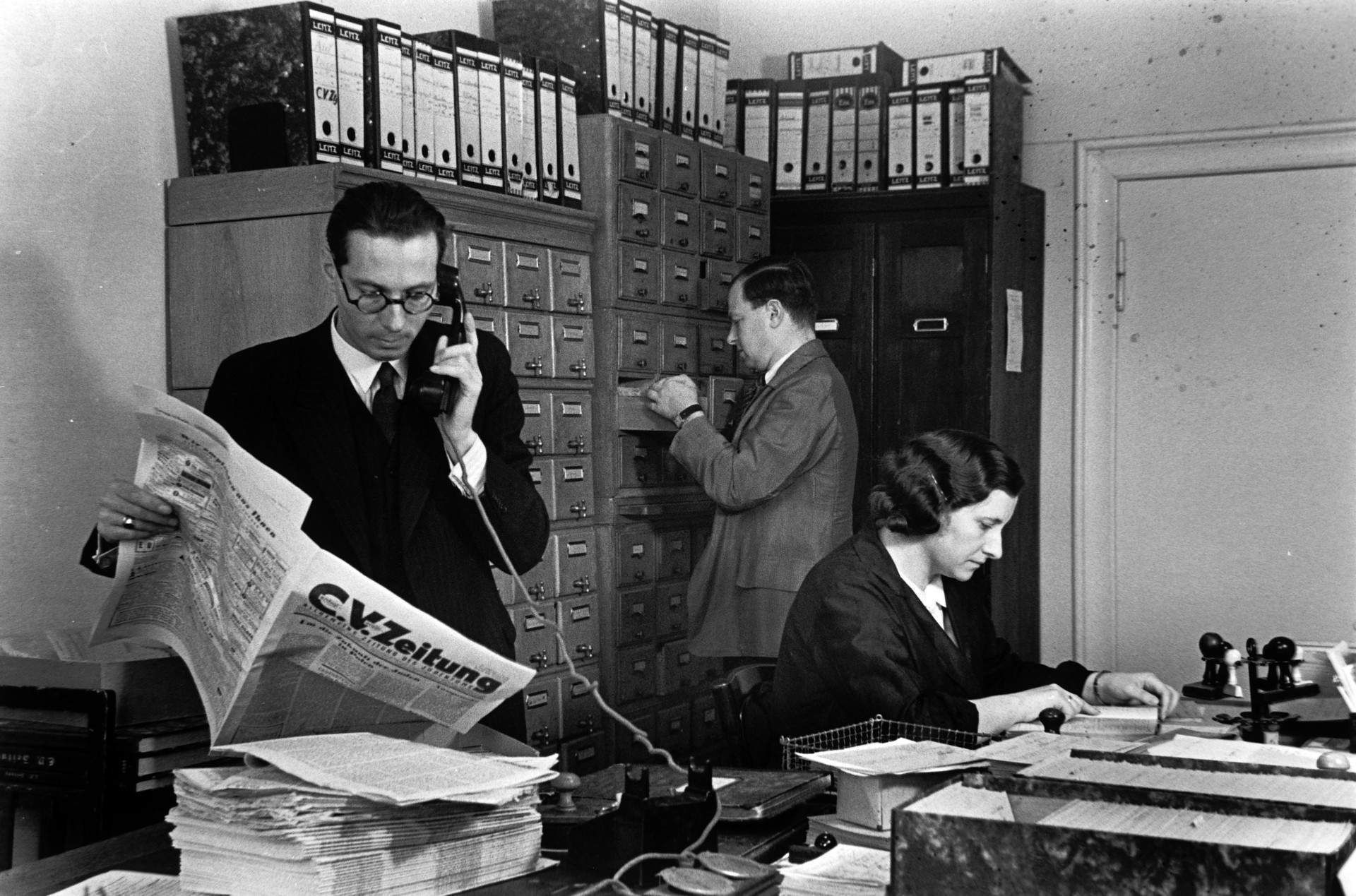
Attacks on Jewish people are often only weakly punished by the courts and police, or even tolerated. Jewish associations such as the Central Association of German Citizens of the Jewish Faith, founded in 1893, or the Association for the Defense against Anti-Semitism are therefore mostly left to their own devices in their fight against anti-Semitic ideology. It was against this backdrop that Adolf Hitler's anti-Semitic and anti-communist propaganda pamphlet Mein Kampf was published in 1925, in which he propagated his National Socialist ideology and blamed Jews for the ills of the republic.
However, the party newly founded by Hitler in 1925 did not initially enjoy electoral success. Its openly anti-Semitic ideology apparently deterred the citizenry, and in the 1928 Reichstag elections, the NSDAP won only 2.6% of the vote. The NSDAP then shifted its focus to current issues such as Germany's reparations payments, the onset of the global economic crisis, and rising unemployment. Anti-Semitism, on the other hand, was taken to the streets: in the 1920s, the party's own militant organization, the SA (Sturmabteilung), engaged in hall and street fights with political opponents and Jewish people. One of the most violent incidents was the pogrom-like “Kudamm riot” on September 12, 1931, in which 500 SA men* verbally abused and beat up numerous German Jews on the Kurfürstendamm in Berlin.
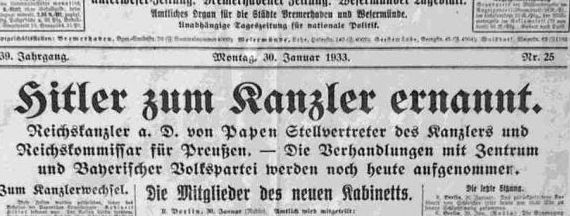
Following the economic and political collapse of the Weimar Republic, discontent among the population grew, resulting in the NSDAP achieving increasingly greater electoral success from the 1930 elections until it came to power in 1933 (see Hitler becomes Reich Chancellor, 1933).