Timelines

Explore histories of migration, citizenship and belonging in Germany and the U.S. over the centuries.


Close
1990
Murder of Amadeu Antonio Kiowa

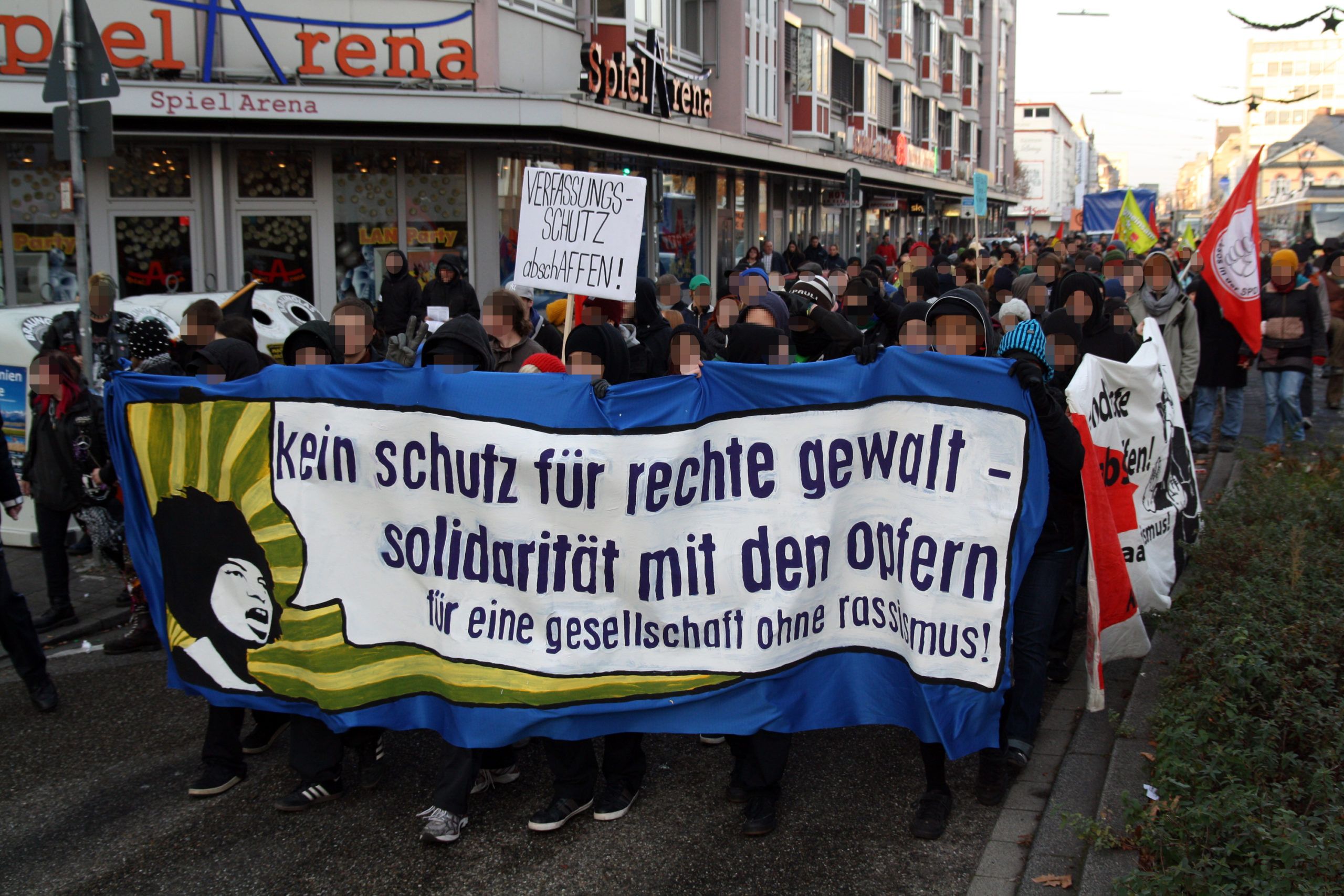
On December 6, Amadeu Antonio Kiowa, a contract worker from Angola, dies after being beaten into a coma by a group of right-wing extremist youths in Eberswalde. He is the first officially known fatality of racist violence since reunification. 

Amadeu Antonio Kiowa came to the GDR in 1987 as a contract worker. On the night of November 24-25, 1990, Amadeu Antonio and two other men* from Mozambique were attacked by a group of right-wing extremist youths in Eberswalde and beaten so severely that he fell into a coma. Two weeks later, the 28-year-old died in hospital. In 1992, five of the perpetrators were sentenced to a maximum of four years in prison for assault resulting in death. The short prison sentence and the judiciary's misjudgment that the crime was not racially motivated were widely criticized by the public. Accusations are made that the judiciary and police are involved in racist systems. The first fatalities of racist violence after 1945 were Ngoc Chau Nguyên and Anh Lân Dô, who were killed in 1980 in a right-wing extremist attack on an asylum seekers' home in Hamburg. According to research by the Amadeu Antonio Foundation, a total of 184 people died as a result of right-wing extremist or racially motivated violence between 1990 and 2014. However, the German government does not recognize most of the 184 documented acts as “racist-motivated.” This is partly because it works with outdated and highly restricted recording criteria and partly because it does not take into account the perspective of the victims' relatives (LINK, disclosure of the NSU murders, 2011). Accordingly, only right-wing extremist and neo-Nazi acts whose perpetrators make a recognizable reference to “race” and “ethnicity” or who obviously belong to the right-wing extremist scene are considered racially motivated acts. This obscures the fact that racism is a structural phenomenon in society that is by no means limited to the right-wing extremist scene, with a multitude of enemy stereotypes, manifestations, and forms of legitimization. The failure to recognize and address racist motives in politics, the judiciary, and the media in Germany is therefore often criticized as an element of institutional racism.
Between 1990 and 2014, a total of 184 people died as a result of right-wing extremist or racially motivated violence. However, the federal government does not recognize most of these deaths as “racially motivated.”
Germany
Sources
  1. http://www.amadeu-antonio.de
  2. https://www.mut-gegen-rechte-gewalt.de/news/chronik-der-gewalt/todesopfer-rechtsextremer-und-rassistischer-gewalt-seit-1990ch
  3. http://initiativeouryjalloh.wordpress.com/
  4. http://www.korientation.de/2014/08/25/die-ersten-offiziell-anerkannten-rassistischen-morde-seit-1945-gedenken-an-ngoc-chau-nguyen-und-anh-lan-do/
  5. isdonline.de/pressemitteilung-initiative-schwarze-menschen-in-deutschland-kritisiert-das-urteil-des-bgh-im-fall-von-oury-jalloh/
Learn how these timelines were made
UNITED STATES
/
GERMANY
All Events
Stories: 0
Search icon
Instagram WRInstagram From HereFacebook
Copyright 2026 With Wings and Roots. All rights reserved.
Terms and Conditions